
Early Life and Education
Tomlinson Holman is known the world over as an American film theorist, audio engineer, and inventor of film technologies, notably the THX sound system. Holman also developed the protocols for the first 5.1 surround-sound audio systems and the world’s first 10.2 audio system.
Born in the small town of Oregon, Illinois, in 1946, Tomlinson Holman grew up walking to the movies on Saturday mornings, a family tradition that had begun when Tom’s father served as a relief projectionist in the 1930s.
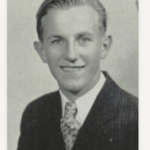
In the 1950s, the Holman family relocated to Downers Grove, where he attended elementary school and, in 1964, graduated from Downers Grove North High School. He is a distinguished alumnus of the school and a 2003 recipient of the DGN Alumni Award of Excellence.
From 1964 to 1968, Holman attended the University of Illinois at Urbana–Champaign, where he began his studies in electrical engineering, later switching his focus to broadcasting and communications. He earned a Bachelor of Science (B.S.) degree in broadcasting and communications from the University of Illinois in 1968.
After graduation, Holman doubled down on his passion for moviegoing, continuing to work with the college’s film production unit and reading everything about audio he could get his hands on. He fondly recalls reading every book in the library on the subject of sound.
A Pioneer in Film Sound and Audio Innovation
Holman was employed by the Apt Corporation in Cambridge, Massachusetts in 1977 where he developed the successful Apt Holman Preamplifier and contributed to innovations in audio processing—especially in areas like noise reduction and signal enhancement. His early work focused on achieving accurate sound reproduction—an idea that would guide his lifelong contributions to the field.
In 1982 Holman’s work attracted the attention of George Lucas who was hot off the success of Star Wars: Episode V – The Empire Strikes Back. Lucas hired Holman as Lucasfilm’s Chief Technical Officer of post-production. It was in 1983 that Holman created a sound system that incorporated room acoustics and a patented overall sound experience to create a sound system that allowed audiences to finally hear movies as filmmakers and sound designers intended. The system was named by Lucasfilm’s Jim Kessler, who–looking for something snappy–combined Holman’s initials with an “X” (for the audio technology term “crossover”), creating an acronym that, coincidentally, George Lucas had used in the title of his debut feature (THX-1138) nearly a decade earlier. It was too perfect a name to pass up, and THX was born.
Holman’s work at Lucasfilm included contributions to Return of the Jedi—the first film to use THX—and Indiana Jones and the Temple of Doom. He also played a central role in the design of Skywalker Sound and the technical infrastructure at Skywalker Ranch.
Teaching, Innovation, and Industry Impact
In addition to his industry work, Holman has had a profound impact as an educator. From 1987 until 2011, Holman taught at the University of Southern California’s School of Cinematic Arts (USC), where he taught film and television sound and mentored generations of filmmakers and sound designers. His teaching helped elevate the role of sound as a critical element of storytelling.
Commuting weekly, Holman continued consulting at Skywalk Ranch between 1987 and 1995, advancing THS systems and shaping modern film sound production.
In 2011 Holman became an employee of Apple, Inc. During his decade-long consulting role athere (roughly 2011 – 2021), Holman contributed to advancements in consumer audio technology, including ear buds, helping extend high-quality sound principles into everyday devices.
Publications, Surround Sound, and Legacy
Holman’s innovations set new standards for audio quality in movie theaters and beyond. Throughout his career, Holman continued to innovate, including the development of the 10.2 surround sound format, which expanded the possibilities of immersive audio.
Over the years, Holman shared his knowledge with a new generation of audio engineers through his books Sound for Film and Television (2001), which is required reading in many college film courses; Surround Sound: Up and Running (2008); Sound for Digital Video (1st ed. 2005; 2nd ed. 2013); and in 2026 a forthcoming book, Cinema Design, a personal and technical look at sound design in cinema.
His achievements have been widely recognized: In 2002, Holman received the Academy Award for Technical Achievement, “for the research and systems integration resulting in the improvement of motion picture loudspeaker systems.” Other accolades earned through his career include the Audio Engineering Society Silver Medal, IEEE (Institute of Electrical and Electronics Engineers) Masaru Ibuka Award, Samuel L. Warner Memorial and Eastman Kodak Gold Medals from SMPTE (Society of Motion Picture and Television Engineers), the Ed Greene Award from CAS (Cinema Audio Society), and lifetime achievement awards from CAS and CEDIA (Custom Electronics Design and Installation Association), The ICTA (International Cinema Technology Association) Industry ICON Award which recognizes outstanding individuals for contributions to the motion picture industry, particularly in sound, projection, and theater technology. ICTA recognized Holman as someone who has: “made outstanding and significant contributions to cinema technology, and as a result, to the enhancement of the moviegoing experience,” Mark Mayfield, vice president of ICTA.
The impact that Holman has had on countless moviegoers worldwide is impossible to quantify. THX is more than the famous “Deep Note” that plays before every THX Certified film. It’s more than just a sound system. Rather, THX was a certification of sound components, acoustics, viewing angles, and much more to deliver what the director intended in a repeatable way to moviegoers around the world. If you have been wowed watching a movie in a modern commercial theater, whether THX Certified or not, you can thank Tomlinson Holman.
ICTA President Frank Tees.
2026 Documentary
Tomlinson Holman’s remarkable career and lasting influence on the world of sound and cinema is celebrated in the documentary film, History Happens Here: The Man Who Changed How We Hear the Movies. The movie created by Jim Toth of Node Films premiered on April 29, 2026 at the Tivoli Theatre in Downers Grove. After the film, Holman participated in a lively Q&A session, sharing stories from his career, insights into sound design, and reflections on the films that inspired him throughout his life. As part of the evening, Holman also offered to share a list of his 25 favorite films.
It is especially hard to order and rank these though I have tried by pushing them up and down the list. They are so different and all of them deserving that this is a kind of fool’s errand, yet nonetheless institutions persist in trying, so have I. In the end, this ranking is highly subjective and how these movies resonated only with me. As I said, there were some others in the 1987 ed. of Sound for Film and Television, but those haven’t made the cut. — Tomlinson Holman
- Lawrence of Arabia
- Who’s Afraid of Virginia Woolf
- Forbidden Planet
- To Kill a Mockingbird
- Brokeback Mountain
- The Godfather, Parts I and II
- 2001: A Space Odyssey
- Casablanca
- Dr. Strangelove: or How I Learned to Stop Worrying and Love the Bomb
- E.T. The Extra-Terrestrial
- Apocalypse Now
- 12 Angry Men
- High Noon
- If
- The Manchurian Candidate (1962)
- The Fugitive
- Bringing Up Baby
- Ran
- The Great Escape
- The King and the Clown (Korea, 2005)
- The Graduate
- Ikiru
- Midnight Cowboy
- Tongues Untied
- Modern Times
And as to even the bottom of this list, I am honored to have obtained original production drawings by Charles D. Hall for Modern Times from a trip to Sotheby’s London when I went in July 1994 for something else altogether: Kim Philby’s effects from his apartment in Moscow, one of the greatest spies ever (meaning worst getting the West’s best resources inside the Soviet Union killed). I only managed one book from his library inherited from Guy Burgess, another spy of the five Cambridge spies. The morning started with Oscar Wilde materials including his cigarette case and a letter from Bosie, all of which went for huge prices, but only a few people were present—most were on the phones. I was a registered bidder and when I came back from lunch and was admitted the room was mobbed with reporters and cameras: Philby was infamous and much of the British public thought his Russian widow should not benefit from the sale. She came in late and sat one seat diagonally away from me. Once the hoopla ended most people left and I found that the remainder of the day was devoted to Charlie, leaving me to bid on my treasure. — Tomlinson Holman
From Downers Grove to Global Influence
From his beginnings in Downers Grove to his global impact on cinema and audio technology, Tomlinson Holman’s work continues to shape how audiences hear and experience the world of film.
Sources
- Wikipedia
- Sound Magazine
- IMDb
- Apple Wiki
- Downers Grove North BlogSpot
- Box Office Pro
- History Happens Here: The Man Who Changed How We Hear the Movies (2026), directed by Jim Toth