A Queen Anne Home with Deep Roots
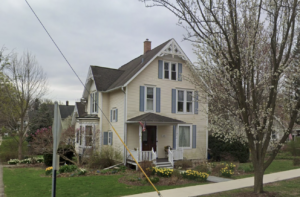
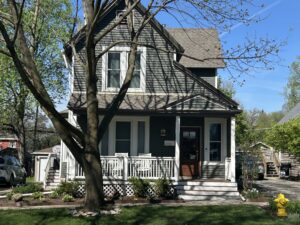
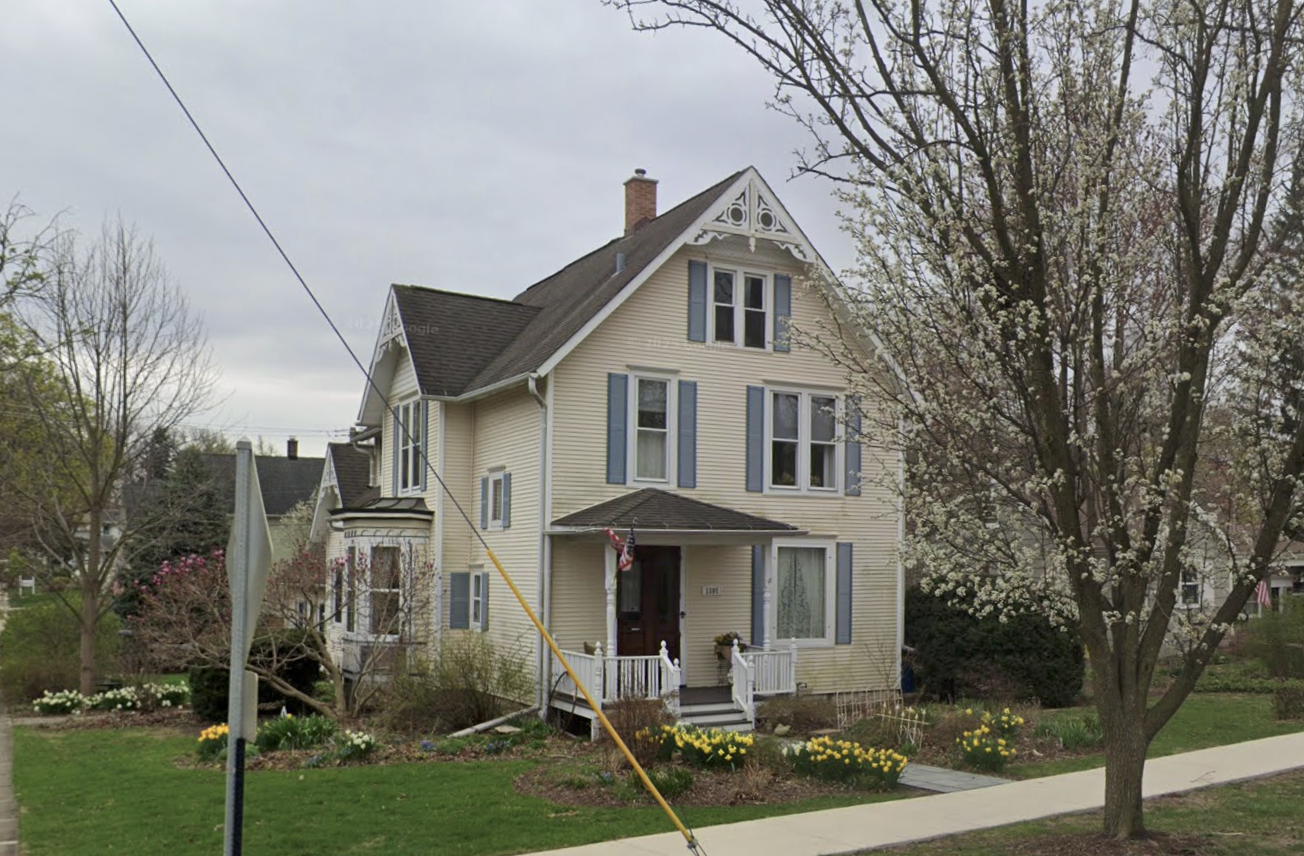
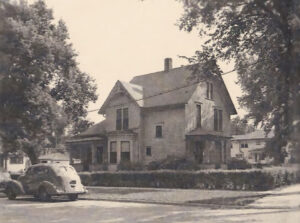 Located across “the lane” (now known as Lane Place) from Henry Carpenter’s General Store, 1101 Maple Avenue was built in 1893 and remains a beautiful example of Queen Anne residential architecture in Downers Grove. Constructed on land once owned by early settlers Samuel Curtiss and Henry Carpenter, the property’s history traces back to the original U.S. land patent and reflects the village’s earliest years of settlement. Situated along Maple Avenue—one of Downers Grove’s most desirable residential streets by the late nineteenth century—the home represents the community’s transition from frontier beginnings into a thriving and architecturally expressive village.
The Fink Family and the Early Years
The home was built by Fred Fink, whose family occupied or retained ownership of the property from its construction in 1893 through the 1930s, passing it down through generations.
The Kjeldsen Family Makes a Home
While few personal stories remain about the Fink family, the history of the Kjeldsen family—who lived in the home for fifty years and for whom the house is now named—offers a rich picture of life at 1101 Maple Avenue.
In 1944, Carl and Janet Kjeldsen purchased the home and raised their three children there. The family became deeply involved in the community and at Gloria Dei Lutheran Church. Janet served on the Altar Guild, was known for her beautiful needlework, and devoted time to many community organizations, including the PTA and Hope’s Front Door. Janet was an excellent golfer and golfed in a league at the historic Belmont Golf Club.
Janet’s Traditions and Talents
Janet was also remembered as an exceptional cook. She once won a new stove with her recipe for Hungarian Roll-M-Ups. As her granddaughter affectionately described her: “The quintessential cook—an Italian who married a Norwegian and won a stove with a Hungarian recipe.”
Carl’s Trains and Neighborhood Memories
Carl worked for fifty years at the Western Electric plant in Cicero, Illinois, earning a reputation for dedication and reliability. Outside of work, he sang in the church choir at Gloria Dei Lutheran Church. He was known for his remarkable mechanical ability and could repair nearly any engine, including his automobiles, kept for decades—in perfect running condition. Carl paid meticulous attention to detail, always keeping his tools clean, organized, and carefully maintained. He was known throughout the neighborhood for the model train display he kept in his basement. It featured tracks, cars, engines, switches and hand-crafted plaster landscapes with tunnels and hills. The trains were maintained with the same precision, patience, and care for which he was known. Carl would often welcome the neighborhood children to gather in the basement for a train show.
Preserving and Renewing a Historic Home
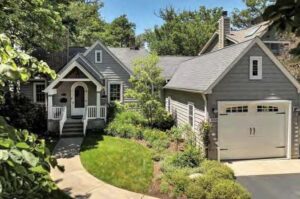
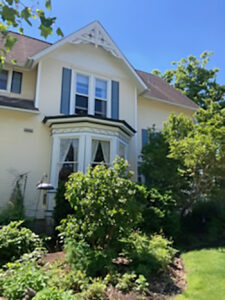 In 1994, the Kjeldsens sold the home to their granddaughter and her husband. The property changed hands again in 2000 when the Knights purchased it and undertook a major renovation. Improvements included the addition of an attached two-car garage with a second story, a family room, an expanded and updated kitchen, and a deck.
Despite these changes, the Knights retained much of the original 1893 character. The living room, dining room, staircase, and upstairs bedrooms were preserved, allowing the home to retain its historic appearance. Original features such as beautiful old windows, the original entry doors, an intricately carved oak staircase, and the steep secondary back staircase continue to define the house’s historic charm. Recently, exact replicas of the original gingerbread peaks were installed. The current homeowner, a master gardener, has created one of Downers Grove’s most admired residential gardens. Recently her garden was featured on the Methodist Church Garden Walk, which raises funds for Bridge Communities.
A Neighborhood Built on Family and Friendship
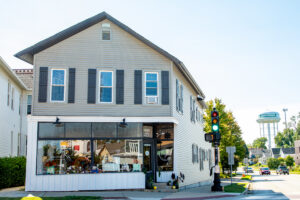
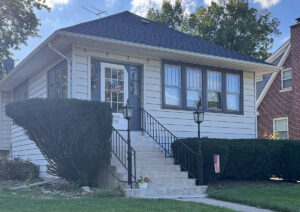
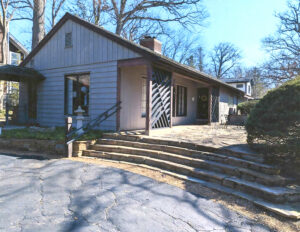
One of the most memorable stories connected to this stretch of Maple Avenue centers on four neighboring homes—1101, 1107, 1117, and 1127 Maple Avenue. The four couples who lived in these homes formed an extraordinary community. Three of the homeowners were related by blood as siblings, while the fourth couple became part of the family through lifelong friendship. Together, they created a neighborhood environment that their children still remember fondly decades later.
A Charmed Childhood on Maple Avenue
Three of the homes had open backyards with no fences, allowing children to roam freely as though they shared one enormous yard. From the 1940s to the 1970s, summers brought neighborhood picnics, games of tag, Ghost in the Graveyard, Hide & Seek, picking tomatoes, concord grapes, peonies, building a homemade tree fort, campfires, softball and sleep outs while winters featured a homemade ice-skating pond, snowball fights and snowmen including a 14’ snowman that was featured in the Downers Grove Reporter.
A Fourth of July picnic tradition began in 1950 and continued through 2025, with those family members who remained in Downers Grove carrying on the celebration. Over the years, the tradition evolved into periodic Fourth of July reunions, bringing children and grandchildren back from across the country. At its largest gathering, in 2010, nearly 70 people attended, and it was featured in the Downers Grove Reporter. Although the original four couples have all passed away, their children and grandchildren remain closely connected and continue to celebrate the friendships and traditions that began on Maple Avenue.
The children of those original families describe their upbringing with a simple phrase: “We had a charmed childhood.”
Through thoughtful stewardship and generations of care, 1101 Maple Avenue continues to stand not only as a beautifully preserved historic home but also continues to be a setting for cherished memories and charmed childhoods.
View the Historic Home Program Application of 1101 Maple Avenue here.
Researched by Nina Fuscaldo, Peg Knight and Andrea Kinsella