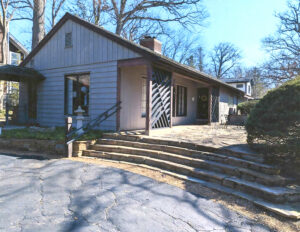
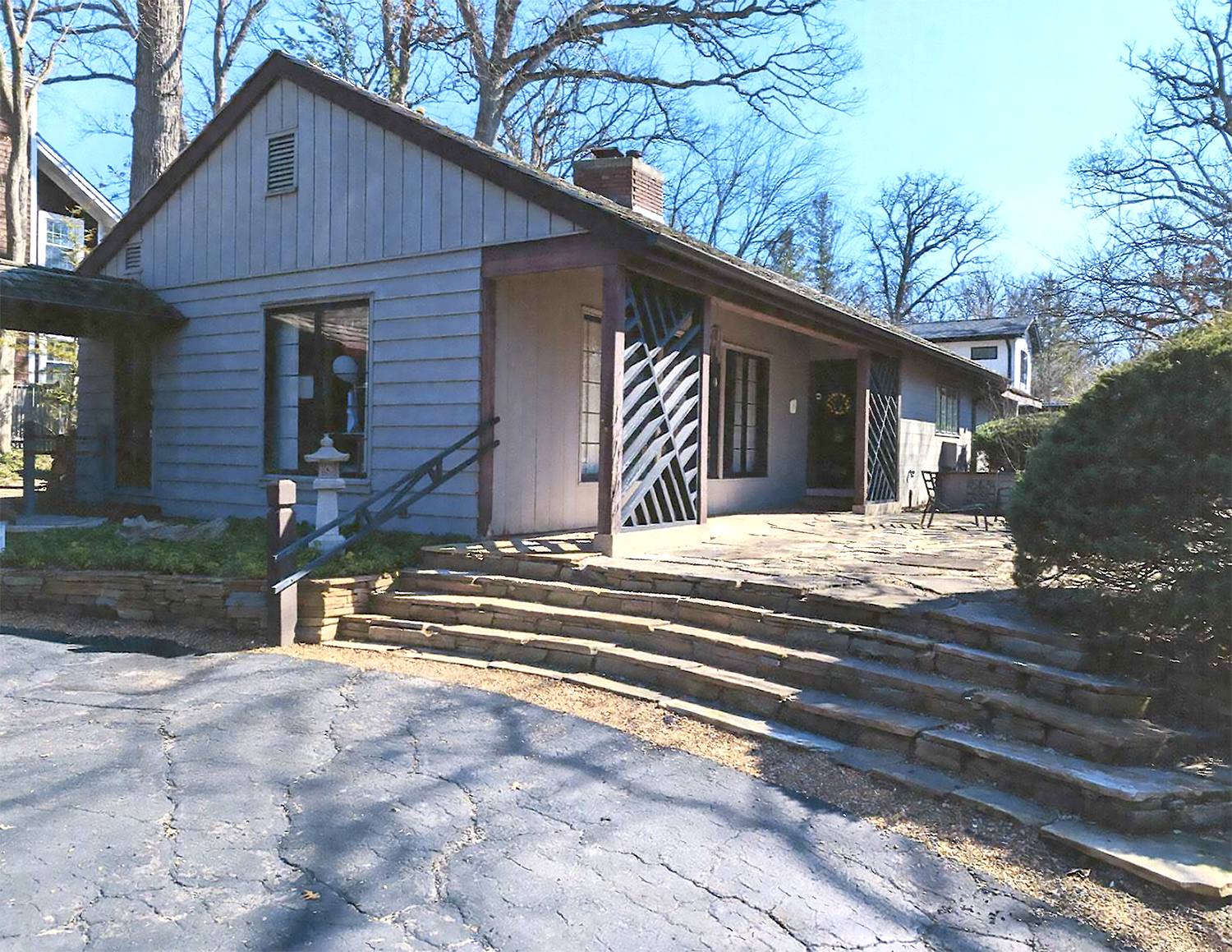

Constructed between 1951 and 1952, the Charles D. Faulkner, Jr. House, located at 1247 Hawthorne Lane, stands as an excellent example of early Mid-Century Modern (MCM) design in the community. Designed by its original owner, Charles D. Faulkner, Jr., the home reflects both architectural innovation and a deep respect for the natural environment.
A Home Designed with Purpose
Charles D. Faulkner, Jr., a Chicago-born architect and University of Illinois graduate, brought both professional expertise and personal philosophy into the design of his own home. After serving in the Army Air Corps during World War II, Faulkner joined his father’s architectural firm, eventually becoming a partner in Faulkner-Faulkner & Associates. The firm earned national and international recognition, particularly for its work designing Christian Science churches, as well as commercial buildings and private residences.
Beyond his architectural career, Faulkner was an active member of the Downers Grove community, serving on the Village Planning Commission and participating in several local organizations.
Architectural Significance
The Faulkner House is a compelling example of “responsible architecture,” a philosophy centered on blending structures harmoniously with their surroundings. Situated on a wooded corner lot in the Denburn Woods subdivision, the home was intentionally designed to preserve and complement the natural landscape.
Key exterior features include:
- A low-slung, one-story ranch form typical of Mid-Century Modern design
- A low-pitched gabled roof and wide footprint that “hugs”
- Natural materials such as wood siding and stone, enhancing its organic aesthetic
- A broad stone terrace that serves as an outdoor living space and creates a seamless indoor-outdoor connection
- Large windows that bring natural light inside and visually extend the living space
- Distinctive diagonal wood elements that add geometric interest and create dynamic light and shadow
- The home’s design emphasizes subtlety and integration rather than dominance—an approach that was forward-thinking for its time.
Interior Highlights
Inside, the home continues its thoughtful and efficient design:
- A 10-foot beamed ceiling in the living room with original stained wood walls
- A wood-burning brick fireplace
- A galley kitchen featuring a copper and beamed ceiling
- A vaulted, beamed dining room
- Slate flooring in the foyer, hall, and kitchen
- Parquet wood floors in the dining room and den
- Though modest in size, each space is carefully planned to maximize functionality and comfort.
A Reflection of Its Era
This residence captures a pivotal moment in architectural history—the transition from post-war traditional styles to the emerging Mid-Century Modern movement. It reflects the era’s emphasis on practicality, simplicity, and a strong connection to nature, embodying what has been described as “everyday modernism” of the early 1950s.
Recognition and Legacy
This home remains a well-preserved example of its original vision. Its recognition through the Historic Home Program ensures that its architectural and historical significance will be appreciated for years to come.
The Charles D. Faulkner, Jr. House is more than a residence—it is a testament to thoughtful design, community legacy, and the enduring value of architecture that respects its environment.
The Charles D. Faulkner, Jr. House Historic Home Program application can be seen here.