1015 Maple Avenue: More Than 140 Years of Downers Grove History
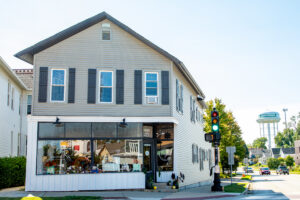
For nearly a century and a half, the modest frame building at 1015 Maple Avenue has stood witness to the changing face of Downers Grove. Over the years, its first floor has housed everything from furniture and groceries to baked goods, delicatessens, repairs, and plumbing services. Upstairs, families made their homes in a small apartment above the businesses below.
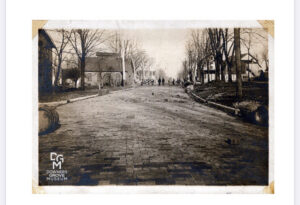
Its story of this building, now recognized as a Historic Home, begins in 1881, when Maple Avenue—and Downers Grove itself—looked very different from how it does today.
A Building Takes Shape
The property was originally part of a much larger parcel owned by the Curtiss family. Land records indicate that in 1881 Mary Curtiss still owned more than 11 acres of Lot 27.
A tiny piece of that land—just one-tenth of an acre—became associated with Jacob Saylor, who appears to have been responsible for developing the property and constructing the building around 1881.
Saylor was an interesting choice for such a project. Born in Pennsylvania in 1806, he was already about 75 years old when the building was constructed. By 1880 he was living in Naperville, where the census identified him as a lumber dealer. He owned property near the Chicago, Burlington & Quincy Railroad station, and his experience in the lumber business may help explain his involvement in developing the Maple Avenue property.
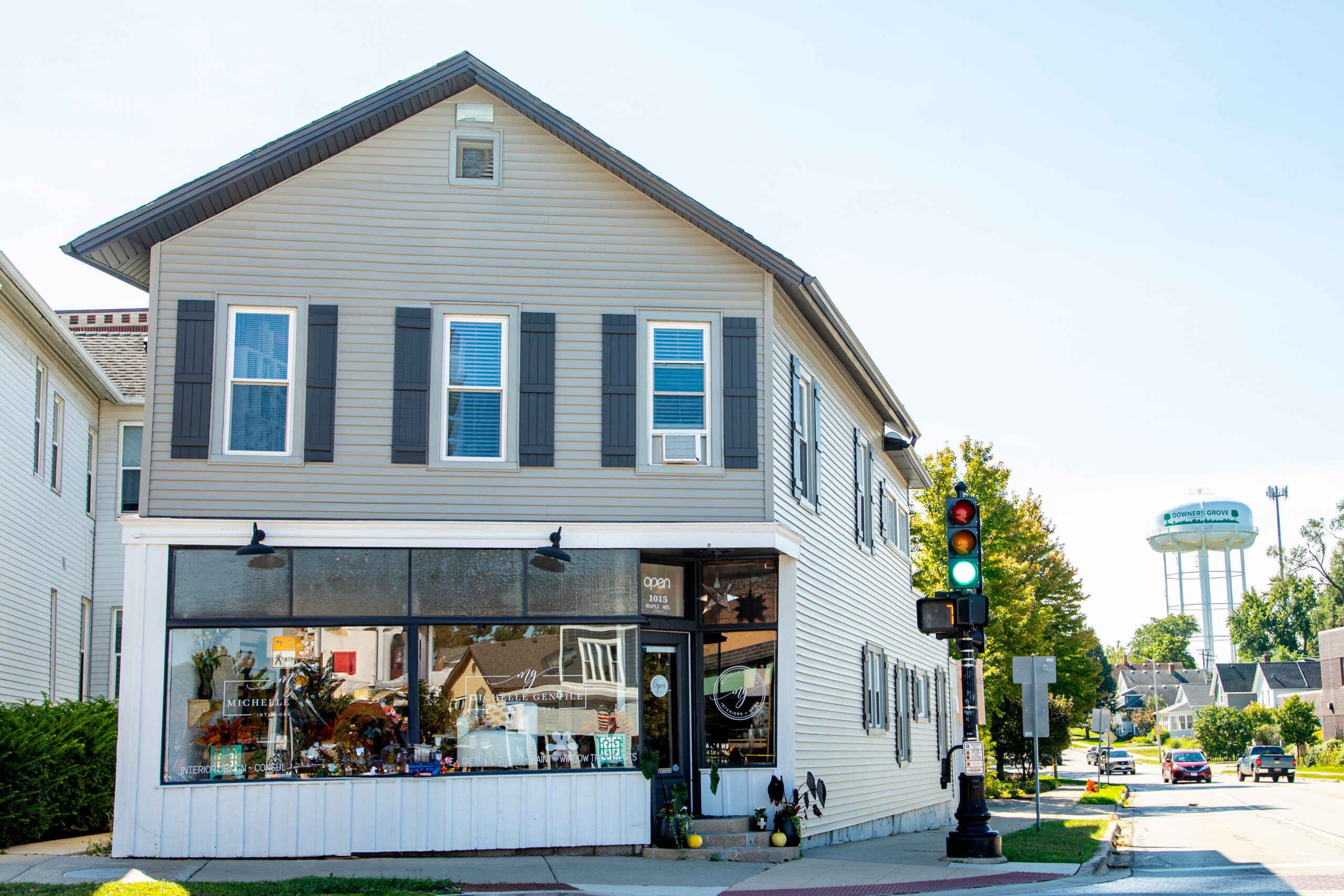
The building Saylor erected was a simple front-gable structure, with its main roof ridge running perpendicular to Maple Avenue. The triangular gable faces the street, creating the peaked façade that continues to distinguish the building today.
The Mergenthal Years
In 1883, Peter W. Mergenthal purchased the building and property.
Mergenthal’s own journey to Downers Grove had begun thousands of miles away. He was born in Hockenwald, Schlesien, Prussia, in 1837 and immigrated to the United States in 1855, arriving in New York aboard the Henry Reed.
By 1861 he had married Mary Walter, and the couple began raising a family. Their children included Amalia, John, Rose, and Lillian. By 1870, the family was living in Chicago, where Peter—who often used his middle name, William—worked as a wheelwright.
A decade later, the Mergenthals had moved to Downers Grove, and Peter was working as a wagon maker. Both occupations would have been particularly valuable in a community where horses, wagons, and carriages were essential to everyday transportation.
The family’s stay in Downers Grove appears to have been relatively short, but the Mergenthals retained ownership of 1015 Maple Avenue for many years. Peter’s son John eventually sold the property in 1910.
During those years, the building was apparently leased to a succession of businesses. Sanborn Fire Insurance maps provide fascinating snapshots of its changing uses. In 1892, it was a furniture store. By 1898, it had become a repair shop, and by 1909, a tinsmith was operating there.
That pattern—one small building adapting again and again to meet the needs of the community—would continue for decades.
A Store Downstairs, a Home Upstairs
The building wasn’t simply a place of business. Its upper floor became a residence, making 1015 Maple both a workplace and home.
City directories show members of the Schnabele and Schultz families living there as early as 1916. By the time of the 1920 census, seven people shared the upstairs apartment.
Edward Schultz worked as a brass engraver, while his brother-in-law George H. Schnabele was a foreman for an electrical supply company. Eleanor Schnabele held a particularly notable position for a woman of that era: she was listed as a forewoman for an insurance company.
While family life unfolded upstairs, commerce continued below.
Emma Gress Forster and the Grocery Years
One of the longest and most significant periods in the building’s history began in 1915, when Emma Diener Gress purchased the property, then known by an earlier address on Maple Avenue.
Emma had deep roots in Downers Grove. Born March 24, 1873, she was the daughter of George and Magdalena Diener, immigrants from Alsace-Lorraine. Her father was a shoemaker, and census records show the family living in Downers Grove by 1880.
In 1903, Emma married Morton William Gress. Their son, George, was born in 1907. Morton had ambitions that eventually took the young family west to Colorado, but tragedy struck when he died in Cañon City in September 1910.
Widowed, Emma returned with her son to Downers Grove.
Five years later, she purchased the Maple Avenue building.
In 1919, Emma married Ralph Forster, an Irish immigrant, and the couple later had a daughter, Marion. Ralph’s occupation in the 1920 census was grocery salesman—and the 1921 Sanborn map identifies the first floor of their Maple Avenue building as a grocery store.
By 1930, there was no question about Emma’s role in the business: the census listed her occupation as “Proprietor—Grocery.” Ralph, meanwhile, worked as a salesman of wholesale groceries.
For Emma, ownership of 1015 Maple Avenue represented remarkable continuity through a life that had included immigration within her parents’ generation, marriage, a move across the country, widowhood, single motherhood, remarriage, business ownership, and then widowhood again when Ralph died in 1933.
Emma continued to own the building until her death in 1943. Although she died in Texas, she was brought home to Downers Grove and buried in Oak Hill Cemetery.
Her son, George Gress, inherited the property and retained it until 1949—meaning the building remained in Emma’s family for approximately 34 years.
Bakeries, Delicatessens, and Neighborhood Shopping
The grocery store was only one chapter in the building’s long retail history.
By 1927, Reiman’s Home Bakery was operating there. In 1935, it was Fröhlich’s Delicatessen, followed by Dieter’s Delicatessen in 1938 and Rigsbee Delicatessen in 1940.
Imagine the activity surrounding this little storefront during those years: neighborhood residents stopping for groceries, bread, meats, or other provisions while a family lived just above them. Long before large supermarkets and shopping centers became part of suburban life, small neighborhood businesses like these were woven into the everyday routines of Downers Grove residents.
The Families Upstairs
The apartment continued to provide a home for many.
In 1944, Rose Hogrefe, a widow and mother of four, was living there. Rose worked in a laundry. Her two younger children, 15-year-old Irving and 13-year-old Ellen Rose, were still at home, while her older children, Beatrice and Lester, had reached adulthood.
By 1946, the upstairs resident was Arthur W. Dallner, a professional house painter. He remained at the address for several years, and the 1950 census indicates that he was by then married and living at 1015 Maple with his wife and two daughters. His occupation was listed as painter and decorator or painting contractor.
After 1951, residents no longer appear at the address in the directories that have been examined, suggesting that the building’s days as both a commercial property and residence may have come to an end.
Downers Grove Plumbing and Heating
By 1944, another long-lived business had arrived: Downers Grove Plumbing and Heating.
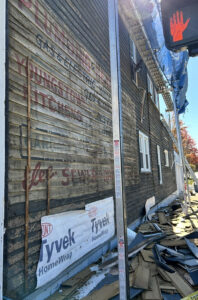
In 1949, Emma Gress Forster’s son George sold the building to Henry Rosenbaum and Arthur Stephens, who operated their plumbing and heating business from the property. By 1950, Stephens and Rosenbaum were listed as the owners, and both were identified as plumbers.
The company remained associated with the building into the 1970s, giving 1015 Maple yet another lengthy chapter as a place where local tradesmen conducted business.
Later ownership records show Mack Beverly becoming owner in 1975, Edgewood Bank listed as owner in 1994, the Elbe Trust in 2002, and the Henry A. Gentile Trust in 2019.
A Small Building With a Long Story
At first glance, 1015 Maple Avenue may seem like a simple old commercial building. Its history tells a much richer story.
A lumber dealer was involved in its beginnings. A Prussian immigrant and wagon maker owned it. A widowed Downers Grove woman purchased it and became the proprietor of its grocery store. Bakers, grocers, delicatessen operators, repairmen, tinsmiths, plumbers, painters, salesmen, working mothers, children, and extended families all passed through its doors.
Its changing businesses also trace the evolution of the surrounding community. Furniture and wagon-era trades gave way to repair shops and tinsmithing, neighborhood groceries and delicatessens, and eventually plumbing and heating services.
And above all that commercial activity, people simply lived their lives upstairs.
A New Chapter at 1015 Maple Avenue
Today, 1015 Maple Avenue continues its long tradition as a place of business. Current owner Michelle Gentile operates Michelle Gentile Interiors + Home—her interior design shop in the building—adding a new chapter to a history that has included a furniture store, repair shop, grocery, bakery, delicatessen, and plumbing and heating business.
It was Michelle’s interest in the history of her building that prompted this research, uncovering the stories of the many people who have owned, worked, shopped, and even lived at 1015 Maple Avenue over the past 140-plus years. Her desire to learn more about the building she now owns is a reminder that historic preservation often begins with curiosity—wondering who came before us and what stories might be hidden within the walls of the places we see every day. Today, Michelle and her interior design business have become part of that continuing story.
More than 140 years after its construction, 1015 Maple Avenue remains a tangible connection to the generations of people who lived, worked, shopped, raised families, and built businesses in Downers Grove.
Every so often a community’s history isn’t found only in its grandest houses or most prominent landmarks. Sometimes it can be found in a small storefront that has quietly adapted, survived, and served its community for more than a century.
See the Historic Home Program application for the Mergenthal Building here.